

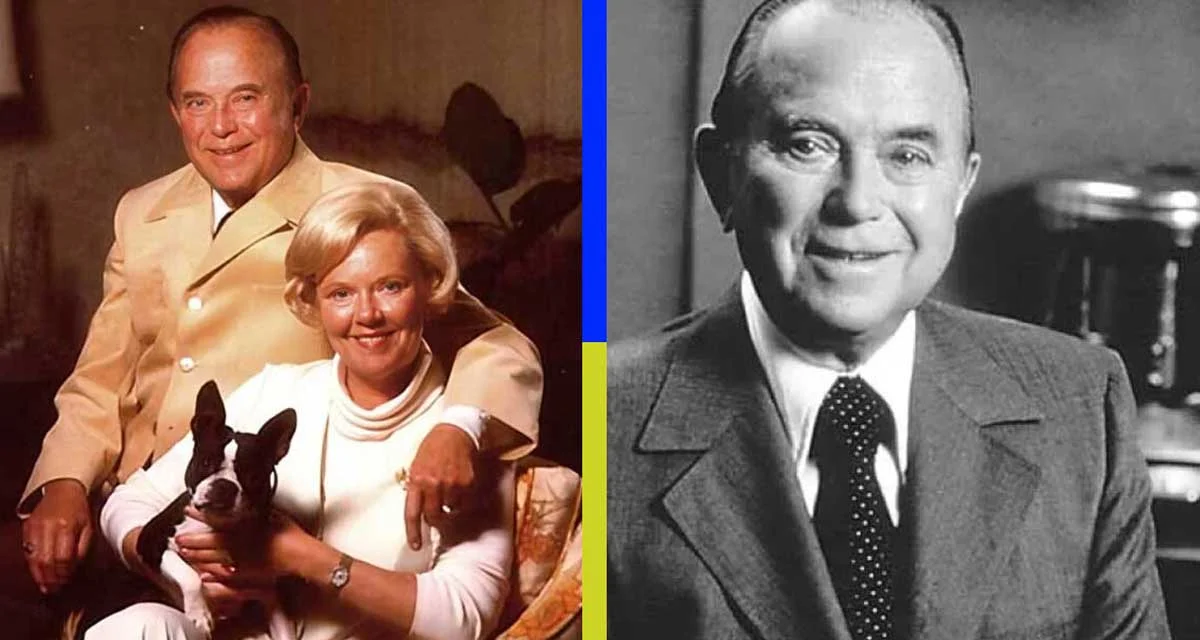
Jane Dobbins Green is best known as the second wife of Ray Kroc, the businessman who played a major role in turning McDonald’s into one of the world’s most recognizable restaurant businesses. Her marriage to Kroc lasted from 1963 to 1968, making it a relatively short but important chapter in his personal life. Unlike Kroc, Jane did not become a major public figure in her own right, which is why information about her life is much more limited. Kroc himself described Jane in his autobiography Grinding It Out, explaining that a mutual friend introduced them and that he was immediately attracted to her personality. He wrote that they began having dinner together repeatedly and married only a short time after meeting. This first-person account is especially useful because it comes directly from Kroc rather than from modern websites repeating unsourced biographical claims.
Table of Contents
Jane Dobbins Green’s Early Life and Family
Very little firmly documented information is available about Jane Dobbins Green’s early life, especially when compared with the extensive biographies written about Ray Kroc. Several modern biography websites claim that she was born on November 22, 1911, in Walla Walla, Washington, and some also identify her parents, but these details are not consistently supported by major historical biographies or primary sources. Because of these differences, it is better to describe her early background with care. Her life before Kroc appears to have included professional work in the Hollywood environment, and the strongest widely circulated detail comes from Kroc himself, who identified her as John Wayne’s secretary. This gives readers an important glimpse into her life before she became associated with one of America’s best-known businessmen.
Jane’s limited public record also tells us something important about the way her story has been remembered. She was not an entrepreneur whose business records generated years of newspaper coverage, nor was she a major entertainment personality with an extensive collection of interviews and public appearances. Much of what is known about her became relevant only because of her connection to Ray Kroc. That means modern articles sometimes fill gaps with assumptions or repeated claims, making it difficult to separate established facts from later storytelling. For readers researching Jane Dobbins Green biography, this distinction matters because a good biography should not treat every online claim as equally reliable. Her story is more accurately understood through the information that can be traced back to Kroc’s own memoir and dependable historical records, while uncertain personal details should remain clearly identified as uncertain.
Jane Dobbins Green and Ray Kroc
The relationship between Jane Dobbins Green and Ray Kroc began during a fascinating period in Kroc’s life. Kroc had already experienced a long first marriage to Ethel Fleming, which ended in divorce in 1961, and he was deeply involved in the rapid development of the McDonald’s business. His meeting with Jane came at a time when his professional life was moving quickly and his personal life was also changing. In Grinding It Out, Kroc explained that a mutual friend introduced him to Jane and that he was immediately impressed by her. His account says that they had dinner together for several consecutive nights, and their relationship developed very quickly. Kroc’s own description provides a rare direct look at how he viewed Jane and their early relationship.
The relationship is also important because Kroc’s feelings about another woman, Joan Smith, later became part of the story. Kroc’s autobiography describes his complicated emotions surrounding Joan and his relationship with Jane. This helps explain why the marriage cannot simply be viewed as an ordinary romance between two people who met and built a life together. Kroc was a highly ambitious businessman, but his personal relationships were also undergoing major changes during this period. Jane therefore became part of a transitional stage in his life, one that occurred between his first marriage and his eventual marriage to Joan, who would later become much more publicly recognized for her philanthropy.
The Marriage of Jane Dobbins Green and Ray Kroc
Jane Dobbins Green and Ray Kroc married in 1963, two years after Kroc had divorced his first wife, Ethel Fleming. Their marriage lasted until 1968, meaning they were together as husband and wife for about five years. This period overlapped with an important stage in Kroc’s business career, when McDonald’s was expanding rapidly and Kroc was becoming increasingly influential in the American restaurant industry. Although Jane was married to a man whose professional life was attracting considerable attention, she herself remained largely outside the business spotlight. She was not a co-founder of McDonald’s, nor is there strong evidence that she held an executive role in the company. Her importance in the historical record comes primarily from her personal relationship with Kroc.
Kroc’s own writing gives an unusually personal view of the marriage. He described Jane as having a very different personality from Joan Smith, whom he would later marry. His description reflects his personal perspective and should therefore be read as his characterization rather than as an objective assessment of Jane. Still, it helps explain why their relationship developed so quickly and why Jane became such an important figure in Kroc’s personal life for several years. The marriage ultimately ended in divorce in 1968, and Kroc married Joan Smith in 1969. This sequence makes Jane Dobbins Green an important but often overlooked part of the timeline of Ray Kroc’s relationships.
Why Did Jane Dobbins Green and Ray Kroc Divorce?
The exact reasons for the Jane Dobbins Green and Ray Kroc divorce should be discussed carefully because there is no single, well-documented public account that provides a complete explanation. Some modern websites connect the divorce to Kroc’s continuing feelings for Joan, while Kroc’s own memoir describes his complicated emotional relationship with Joan around the period of his marriage to Jane. His account shows that Joan remained an important person in his thoughts, but that does not mean every later claim about the marriage’s problems can automatically be treated as established fact. The safest conclusion is that the marriage ended in divorce in 1968, while the precise private reasons are not fully documented in authoritative historical sources.
This part of Jane’s story also shows why celebrity biographies need to be written responsibly. When a person is connected to a famous businessman, readers naturally want to know why a relationship ended, what happened behind closed doors, and whether another person was involved. Those questions can make unsupported stories spread quickly. In the case of Jane Dobbins Green and Ray Kroc, it is more useful to distinguish between what Kroc personally recorded, what historical records establish, and what later websites merely suggest. The confirmed timeline is straightforward: Kroc married Jane in 1963, they divorced in 1968, and he married Joan Smith in 1969. Beyond that timeline, claims about private disagreements should be presented with appropriate caution.
What Happened to Jane Dobbins Green After the Divorce?
After her divorce from Ray Kroc, Jane Dobbins Green largely disappeared from the center of public attention. This is one of the reasons her later life remains difficult to reconstruct. Ray Kroc continued to receive enormous attention because of McDonald’s, his business activities, and his later marriage to Joan Kroc. Jane, by contrast, did not build a comparable public profile. As a result, searches for her later career, relationships, finances, and personal activities often lead to websites containing information that is difficult to independently verify. A responsible account should therefore avoid presenting uncertain details as fact simply because they appear repeatedly online.
The contrast between Jane and Joan is particularly noticeable. Joan became a major public figure after marrying Kroc in 1969 and later developed a substantial philanthropic legacy. Jane did not have the same public role, which meant that her life was less frequently recorded by newspapers, business historians, or major biographers. This does not mean that her life was unimportant. Rather, it demonstrates how historical visibility often depends on a person’s profession, public activities, and relationship with major institutions. Jane Dobbins Green’s private lifestyle is itself an important part of understanding why so little reliable information exists about her later years.
Jane Dobbins Green’s Death and Later Years
Information about Jane Dobbins Green’s death is another area where online sources should be approached with caution. Several recent biography websites report that she died on August 7, 2000, at the age of 88, and some identify Los Angeles as the location associated with her final years. However, these details are repeated across secondary websites rather than being consistently supported by major primary or archival sources available in the search results. For that reason, readers should distinguish between a commonly reported claim and a fact independently confirmed through a strong historical record. This is especially important when discussing a person’s exact death date, cause of death, or burial location.
The same caution applies to the frequently searched phrase “Jane Dobbins Green death cause.” Some websites describe her death as resulting from natural causes, but the evidence available does not justify turning that claim into a detailed medical explanation. There is no need to speculate about a person’s health when reliable documentation is limited. What matters most for her biography is that she lived largely outside the public spotlight after her marriage to Kroc ended, while her name continued to appear in histories of Kroc because she was an important part of his personal life during the 1960s. Her later years therefore remain one of the quieter chapters of the broader Ray Kroc story.
Jane Dobbins Green, Ray Kroc, and Joan Kroc
Understanding Jane Dobbins Green, Ray Kroc, and Joan Kroc together makes the timeline of Kroc’s personal life much easier to understand. Ray Kroc first married Ethel Fleming in 1922, and that marriage ended in divorce in 1961. He then married Jane Dobbins Green in 1963, with their marriage ending in 1968. In 1969, Kroc married Joan Smith, who later became known as Joan Kroc. This means Jane occupied a relatively short but significant place between Kroc’s first and third marriages.
Joan Kroc eventually became much more famous for her charitable work, especially after Ray Kroc’s death in 1984. Her philanthropic activities created a lasting public legacy that was very different from Jane’s private life. This difference can sometimes cause confusion because people searching for Ray Kroc’s wives may encounter much more information about Joan than about Jane. Jane Dobbins Green was not Joan Kroc, and she should not be credited with Joan’s philanthropic activities or later achievements. Jane’s place in history is primarily connected to her marriage to Kroc and the period of his life when McDonald’s was undergoing major expansion.
Jane Dobbins Green’s Legacy
The legacy of Jane Dobbins Green is quieter than that of the people with whom she became associated, but that does not make her story uninteresting. Her life provides a glimpse into the private side of Ray Kroc during a period when his business ambitions were changing American food culture. She was connected to Hollywood through the work attributed to her before her marriage and later became part of Kroc’s personal story during the rise of McDonald’s. Yet she did not become a business celebrity or public personality herself. That contrast makes her biography different from the usual stories surrounding famous entrepreneurs.
Ultimately, Jane Dobbins Green is remembered mainly because of her relationship with Ray Kroc, but reducing her entire life to the title of “Ray Kroc’s second wife” leaves out an important point: much of her personal story simply was not recorded publicly. The most reliable information establishes her marriage to Kroc from 1963 to 1968 and Kroc’s own account of their meeting and relationship. Other details, particularly concerning her early family life, exact personal history, and later years, should be handled carefully when sources disagree. Her story is therefore best understood not as a dramatic celebrity tale, but as a relatively private life that briefly intersected with one of the most influential business stories of the twentieth century.
Frequently Asked Questions About Jane Dobbins Green
- Who was Jane Dobbins Green?
Jane Dobbins Green was an American woman best known for being the second wife of Ray Kroc, the businessman associated with the expansion of McDonald’s. - When did Jane Dobbins Green marry Ray Kroc?
Jane Dobbins Green married Ray Kroc in 1963. Their marriage lasted approximately five years before ending in divorce in 1968. - Why did Jane Dobbins Green and Ray Kroc divorce?
The exact private reason for their divorce is not fully documented in reliable historical sources. Ray Kroc later married Joan Smith in 1969. - Did Jane Dobbins Green work for John Wayne?
Ray Kroc’s autobiography identifies Jane as having worked as John Wayne’s secretary before their relationship. This is one of the better-known details about her earlier career. - What happened to Jane Dobbins Green after her divorce from Ray Kroc?
She largely stayed away from public attention. Compared with Ray Kroc and his third wife, Joan Kroc, relatively little reliable information is available about Jane’s later life.
Recent post: Willie Nelson and Angelina Jolie: The Real Connection
